
A broken oven, rising tension, and immediately the contentious question: who pays? Between tenant and landlord, the line of responsibility sometimes hinges on a simple clause, a forgotten word in the lease, or a dubious interpretation of the law. Daily maintenance, major repairs, each party’s share: on paper, everything seems clear. In reality, the slightest malfunction can turn into a full-blown battle.
Tenant or landlord: who does what for the maintenance and repair of the oven?
The allocation of costs and work related to the oven in a rental situation primarily depends on the distribution of roles outlined in the lease and legal texts. For tenants, it involves ensuring regular maintenance tasks: cleaning the appliance, checking its proper functioning, replacing a malfunctioning knob or an aging seal. These are the small everyday repairs that fall under normal usage.
However, if the breakdown is due to a technical defect, a part failing for no reason other than natural wear and tear, responsibility shifts. The landlord must guarantee a dwelling where everything works, including the oven, if it is mentioned in the lease or in the inventory. If the appliance fails without any fault of the tenant, it is the landlord’s responsibility to arrange for and bear the cost of its replacement. Case law leaves no room for doubt: normal usage cannot be blamed on the tenant. But beware, a mistreated oven, used carelessly or left neglected, and the bill may quickly fall back on the occupant.
In real estate agencies and management firms, the question arises repeatedly: who pays for the replacement of an oven in a rental? It all depends: is the oven listed in the lease? How old is it? Is the breakdown due to wear or misuse? Professionals remind us that a detailed analysis, on a case-by-case basis, is necessary to avoid conflicts and misunderstandings. Neglecting this point risks turning a simple breakdown into a prolonged legal dispute.
Replacement of the oven in rental: what situations necessitate changing the appliance?
The replacement of an oven in a rental does not occur at the slightest malfunction. It is the evident wear, serious breakdown, or impossibility of repair at a reasonable cost that compels action. As long as the appliance is mentioned in the inventory and has not suffered damage attributable to the tenant, the landlord must step in. The law requires it: a dwelling must remain equipped with appliances in normal working order throughout the lease term.
Here are the main situations where replacing the oven becomes unavoidable:
- The oven breaks down while the tenant was using it normally, and the repair would cost more than a new appliance.
- The oven, noted as functional during the inventory, becomes out of service due to natural wear over the years.
- For a furnished rental, the absence of a functional oven causes the property to lose its legal status as furnished.
According to the official list of rental repairs, replacing an outdated, faulty, or irreparable appliance is never the tenant’s responsibility, unless they are responsible for the breakage or deterioration. Therefore, it is up to the landlord to intervene, to guarantee the tenant a peaceful use in accordance with the commitment made at the time of signing the lease.
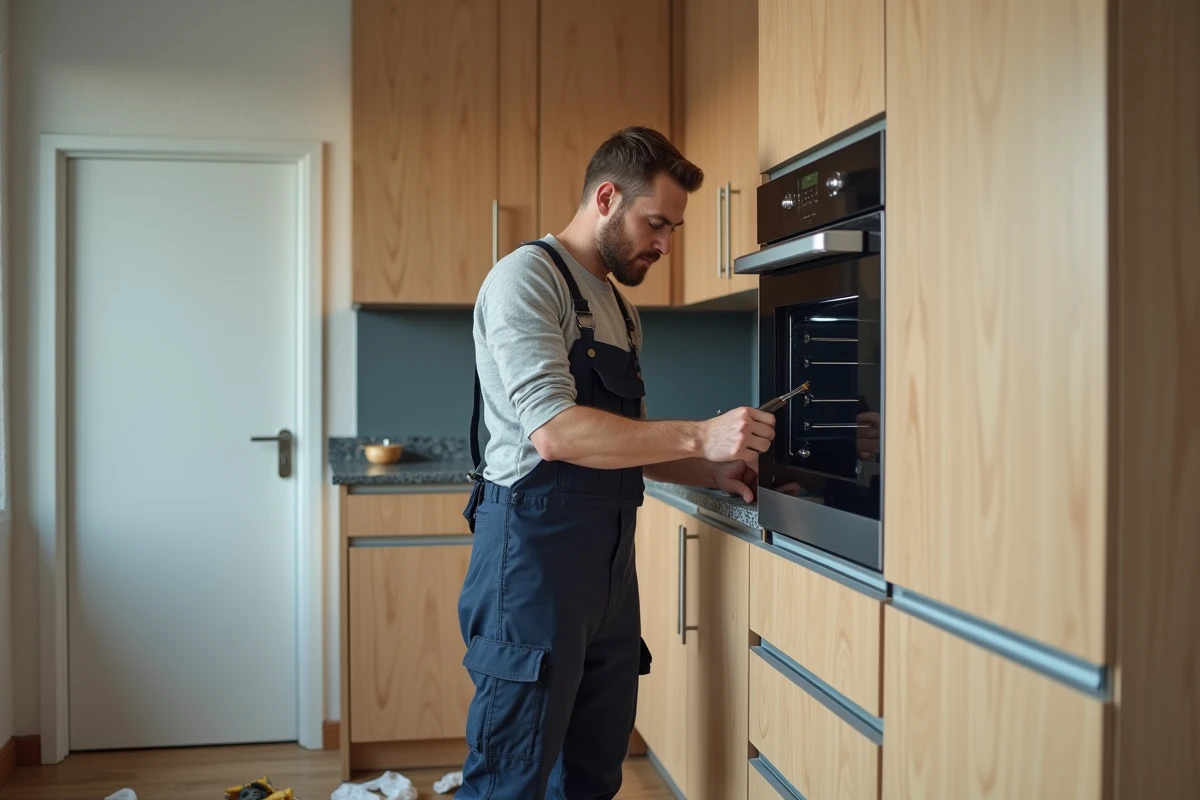
What to do in case of disagreement over cost coverage?
When tenants and landlords cannot agree on the allocation of costs, the dialogue quickly turns into a standoff. Each party relies on their interpretation of the lease, the inventory, or the infamous list of rental repairs. The issue: knowing who has to open their wallet to replace the oven.
The first step is to calmly review the lease and the inventory. These documents are authoritative: if the oven is clearly listed and the breakdown does not result from tenant negligence, the replacement falls to the landlord. If, on the contrary, misuse or intentional damage is proven, the tenant takes over to settle the bill.
If the disagreement persists, there is a quick and cost-free solution: contact the departmental conciliation commission. This free service intervenes to defuse conflicts surrounding rental management issues, repairs, or contract enforcement. Mediation often helps avoid lengthy and costly legal proceedings.
As a last resort, if no agreement is reached, the local court will decide. The judge will base their decision on regulations, the condition of the equipment, the good faith of each party, and evidence such as invoices, photos, and email exchanges. The verdict will then depend on the strength of the case and the seriousness with which each party has defended their position.
The oven may break down, but the trust between tenant and landlord should never slip away so easily.