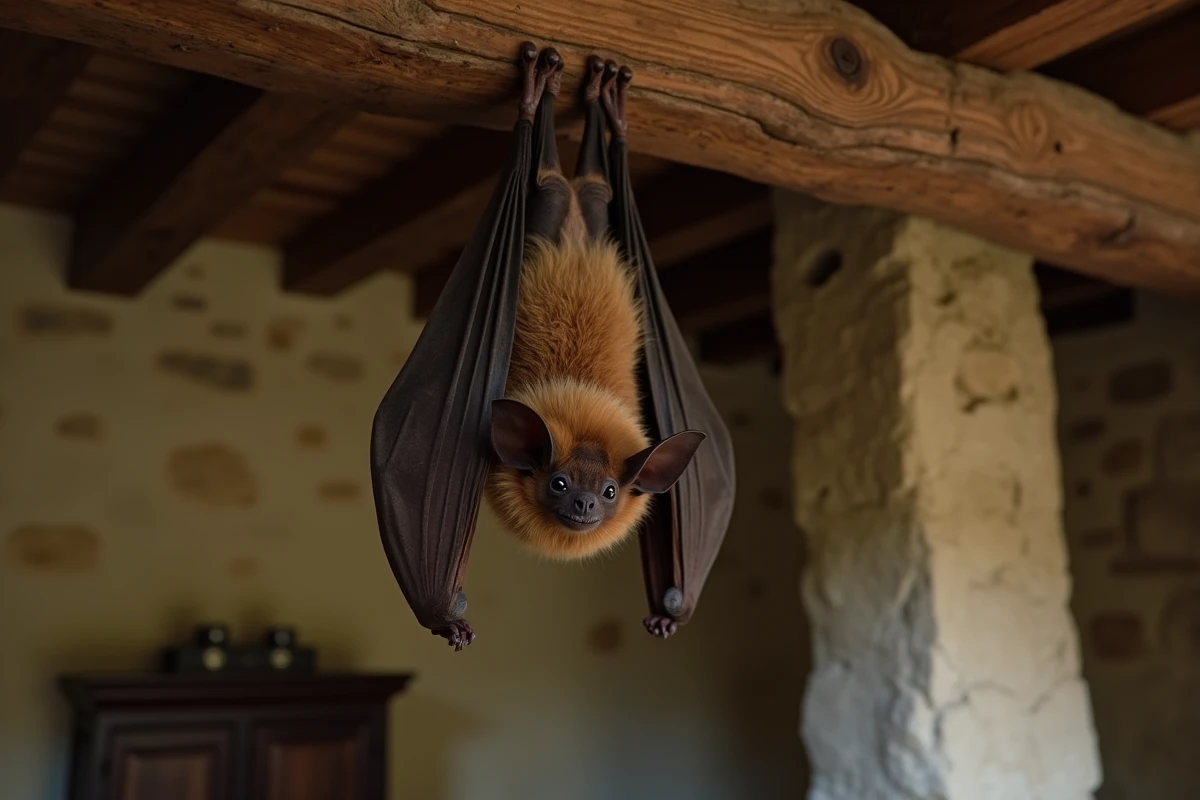
A bat entering a home often provokes a mix of surprise and concern. Beyond the instinctive reaction, this event has been subject to various interpretations depending on the times, regions, and belief systems. A nocturnal animal by nature, the bat holds a unique place in the popular traditions around the world.
Bats and the Symbol of Transformation in Ancient Traditions
In many cultures, the bat is associated with the notion of transformation and passage between two worlds. Its ability to move in total darkness, guided by echolocation rather than light, has made it an animal linked to the boundaries between the visible and the invisible.
Among the Mayans, the bat was connected to the underworld and the cycles of death and rebirth. The god Camazotz, depicted in the form of a bat, embodied this duality. Its presence was not necessarily negative: it marked a threshold, a tipping point in the life of an individual or a community.
In China, the perception is radically different. The word “bat” (蝠, fú) is a homophone of the word “happiness” (福, fú). The animal is therefore considered a omen of luck and prosperity. Five bats together represent the five traditional blessings: longevity, wealth, health, virtue, and peaceful death. Seeing a bat enter one’s home was perceived as a favorable sign.
These two examples illustrate how interpretation depends on cultural context. The same animal, the same event, two opposing readings. Anyone interested in the meaning of the bat in the house quickly discovers this diversity of meanings according to traditions.
European Beliefs: Between Omen of Death and Home Protection
In Western Europe, the Middle Ages permanently associated the bat with dark forces. Its exclusively nocturnal activity, its appearance deemed unsettling, and its proximity to abandoned places fueled persistent superstitions.
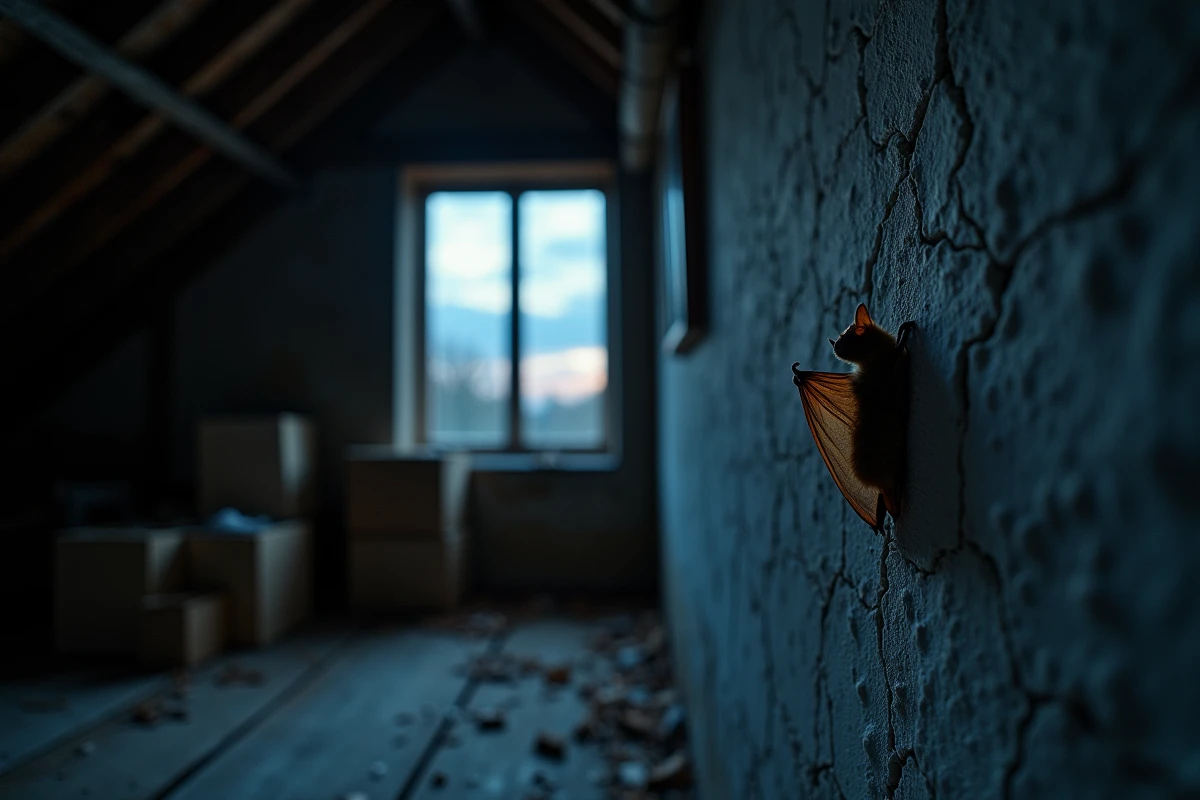
In several regions of France, England, and Germany, a bat entering the house was interpreted as a omen of illness or imminent death in the household. This belief was based on the idea that the animal, capable of navigating between night and day, acted as a messenger between the world of the living and that of the dead.
However, this grim reading was not universal in Europe. In some rural areas of southern France and in Italy, a bat hanging on the lintel of a door protected the house from the evil eye. Popular tradition attributed to it a role as a guardian, capable of warding off malevolent spirits due to its ambiguous nature.
- In Scotland, a bat flying upward after entering meant that danger would pass without consequence
- In Poland, its presence in a bedroom was interpreted as the announcement of a long journey
- In the Balkans, the animal was sometimes associated with protecting crops from nocturnal pests
These interpretations often coexisted in the same region, carried by different families or villages. No unified reading has ever dominated European folklore on this subject.
Meaning of the Bat in Islam and Other Religious Traditions
In Islamic tradition, the bat does not occupy a central doctrinal place, but it appears in some commentaries and popular interpretations. Its nocturnal life and withdrawal from daylight have led some exegetes to see it as a symbol of isolation or withdrawal from the world.
Some popular interpretations in the Muslim context consider that a bat in the house may signal the presence of negative energies or a need for spiritual purification of the space. These readings do not stem from the Quranic text itself but from local cultural traditions that have merged with religious practice.
In Judaism, the bat is among the unclean animals mentioned in Leviticus. Its presence in a home does not have any particular prophetic significance in the texts, but Ashkenazi popular traditions sometimes viewed it as a reminder of spiritual vigilance.
Buddhism, on the other hand, does not burden the bat with negative symbolism. In some Southeast Asian traditions, the animal is simply seen as a living being caught in the cycle of life, without any prescriptive value.
Why a Bat Enters a House: Beyond Beliefs
It is useful to remember that the presence of a bat in a dwelling almost always has a simple zoological explanation. The animal is seeking shelter, a source of warmth, or has gotten lost while hunting insects attracted by artificial light.
Young bats, still clumsy in their movements, are more likely to enter through an open window during the summer. Old buildings with accessible attics or cracks in the masonry provide natural entry points.
- An open window at night with a light on attracts insects, and by extension, the bats that feed on them
- Attics and roof spaces serve as resting places for several European species
- An individual disoriented by a storm or strong wind may accidentally find itself inside
The vast majority of intrusions result from seasonal coincidence, not from a supernatural message. Bats are also protected animals in many European countries, and their presence often indicates a healthy environment rich in biodiversity.
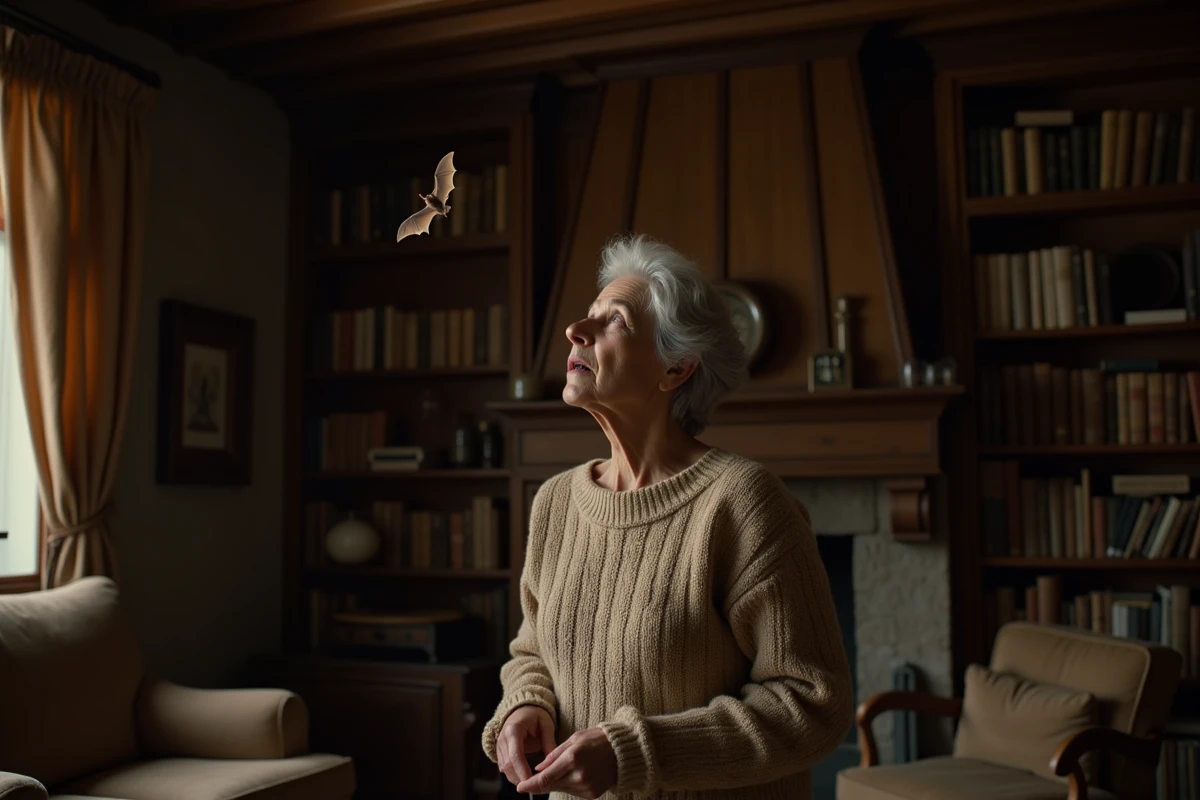
Whether one gives credence to ancient beliefs or prefers a naturalistic reading, the bat remains an animal that fascinates due to its uniqueness. The only mammal capable of active flight, nocturnal in a diurnal world, it continues to hold a special place in our relationship with the living world. Its presence in a house may tell us less about our fate than about the permeability between our constructed spaces and the nature that surrounds them.