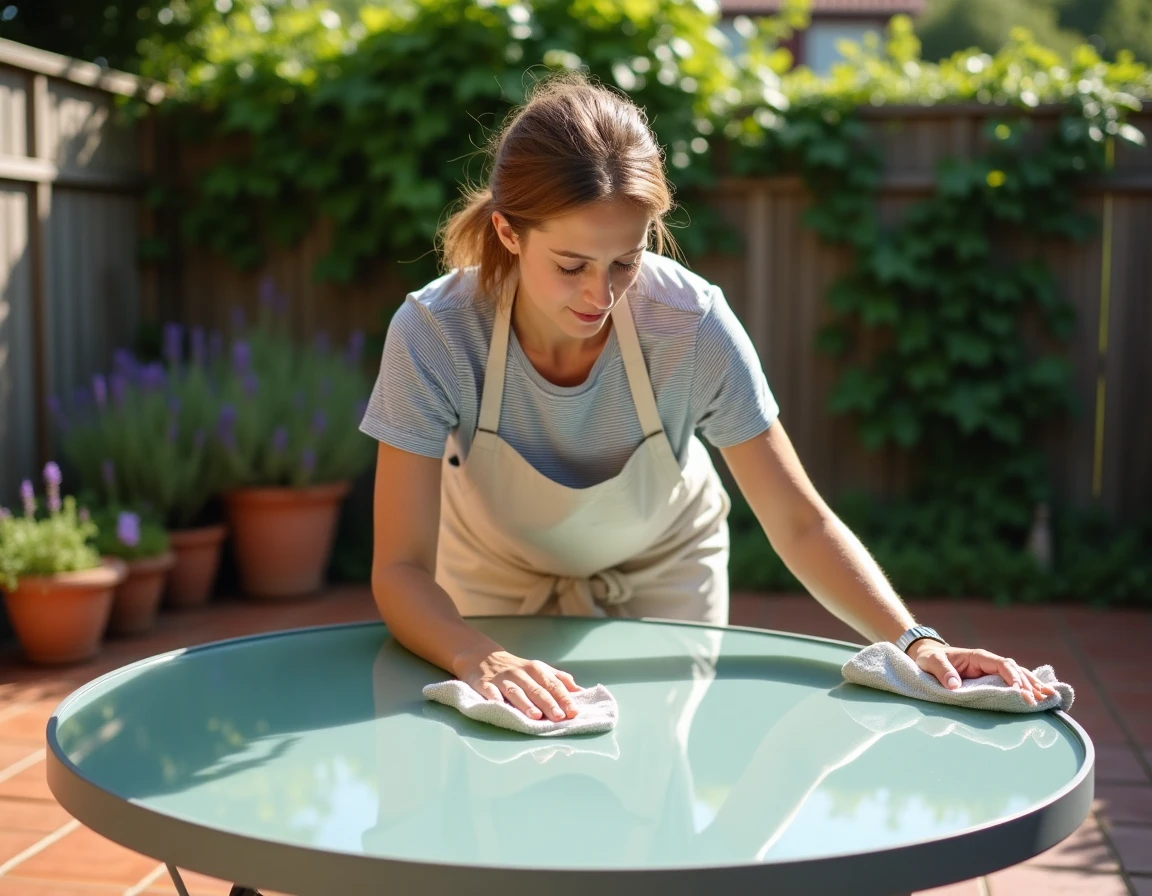
A trace of limestone after the rain, a micro-scratch left by a ceramic dish, a chip at the corner of the tabletop: the glass garden table can withstand much more than one might think. Protecting and maintaining this type of furniture goes beyond just wiping it down from time to time. The choice of glass, the products used, and how to cover the table in winter determine its lifespan.
Tempered glass or ordinary glass: a choice that impacts your safety
Have you noticed the mention of “tempered” or “safety” on some tabletops? This label changes everything. Tempered glass undergoes a thermal treatment that makes it several times more resistant to impacts than regular glass.
In case of breakage, it shatters into small, less sharp pieces, whereas ordinary glass produces large, sharp shards. French emergency services have noted an increase in accidents related to the shattering of non-tempered glass tables in recent years, often due to trivial impacts (falling objects, a child leaning on it) or extreme heat.
Before thinking about maintenance, check that your tabletop bears the mention “tempered glass” or “safety”. If it does not, consider a replacement. No cover or cleaning product can compensate for a structural safety defect. Specialized manufacturers like Proloisirs now offer tempered glass tabletops with anti-UV and anti-scratch treatments, designed to withstand prolonged outdoor conditions.
Knowing several tips for protecting a glass table allows you to go beyond simple cleaning and adopt a comprehensive approach, from the safety of the material to the choice of accessories.
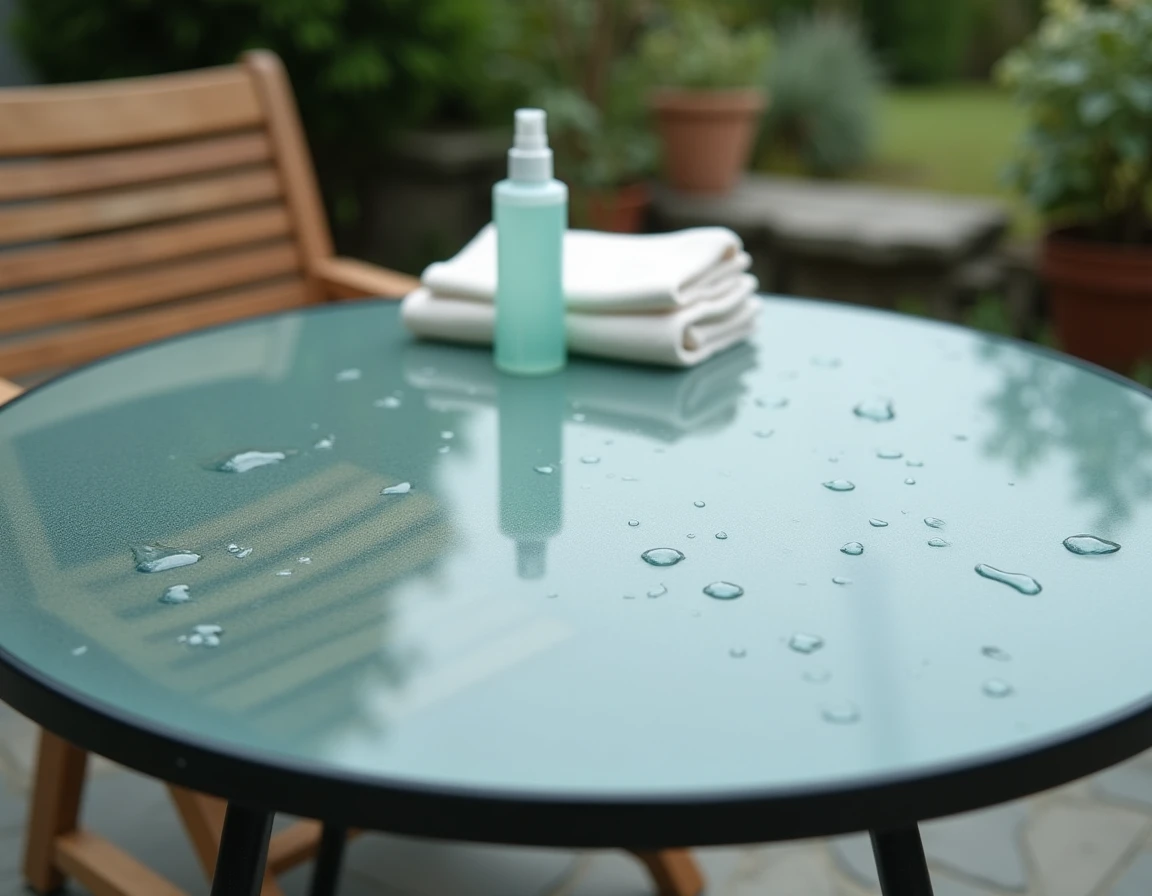
Cleaning the glass tabletop without harsh chemicals
The classic reflex is to use window cleaner spray. It works, but most of these sprays contain solvents and synthetic fragrances that end up in your garden soil with every rinse. With an outdoor table cleaned regularly, these residues accumulate quickly.
Two recipes to replace industrial sprays
- Warm water and white vinegar (one cup of vinegar for one liter of water): effective against limescale, fingerprints, and food residues. Apply with a microfiber cloth, rinse with clear water, and dry immediately to avoid streaks.
- Warm water and black soap (one tablespoon for one liter of water): ideal for greasy stains left by food or sunscreen. Black soap is biodegradable and does not leave a film on the glass.
- Baking soda paste (mixed with a few drops of water): to be used occasionally on ingrained stains or tree resin deposits, gently rubbing with a soft cloth, never with an abrasive sponge.
A dry microfiber cloth after each cleaning prevents limescale marks. This is the simplest and most effective gesture to maintain the transparency of the tabletop.
Preventing scratches: what really damages glass daily
Scratches on a glass table rarely come from a spectacular accident. They appear when sliding a ceramic dish, when a grain of sand gets stuck under a plate, or when placing pruning shears after a gardening session.
Using fabric or cork placemats protects the surface at every meal without generating waste. Unlike disposable plastic tablecloths, a cork placemat lasts several seasons and does not blow away at the first gust of wind.
For heavy objects (flower pots, stone candles, carafes), place a felt pad under the base. These pads cost a few euros and are replaced once a year. This provides more durable mechanical protection than any surface treatment applied afterward.
The trap of “scratch-resistant” products sold in supermarkets
Some sprays claim to fill in existing micro-scratches. In practice, they leave a temporary silicone layer that gives a smooth appearance for a few days, then fades. No consumer product can repair a scratch in glass. Prevention remains the only reliable strategy.
Winter protection and sustainable approach: beyond the plastic cover
Covering the table in winter is a reflex shared by most garden furniture owners. The most common method is the polyethylene cover sold in packs at DIY stores. It provides adequate protection, but tears after one or two seasons, ends up in the trash, and retains condensation that promotes mold on the base.
Alternatives to disposable covers
- Coated polyester cover (with a dense enough weight to resist UV) with ventilation eyelets: it allows air circulation, reducing condensation. Its lifespan far exceeds that of a low-quality cover.
- Vertical storage of the tabletop against a wall, in a garage or garden shed, wrapped in an old blanket or thick sheet. This gesture eliminates the need for a cover and protects the glass from brutal thermal shocks (frost followed by direct sunlight).
- Tabletop brought inside if the table is removable. Many glass garden tables have a tabletop simply placed on the base. Storing it flat in a dry location remains the best protection against frost and thermal shocks.
The base (aluminum, steel, woven resin) can generally stay outside if designed for outdoor use. It is the glass tabletop that concentrates the fragility.
Positioning the table daily
Avoid placing the table in full sun without shading, especially if the glass is dark. A dark glass absorbs heat and increases the risk of thermal shock when a cold object (carafe, ice bucket) is placed on it. A semi-shaded position, under a pergola or umbrella, reduces this risk and limits fading of the base.
Protecting a glass garden table involves three levels: choosing a tempered glass tabletop from the outset, cleaning with simple products that do not pollute your soil, and preventing scratches with reusable accessories rather than temporary chemical treatments. The most cost-effective gesture remains the most discreet: a microfiber cloth after each meal, a cork placemat, and a tabletop stored dry as soon as the first frosts arrive.