
Have you ever noticed that an idea often pops up at the wrong moment, like in the shower or while folding laundry, but never when you sit down to create? This discrepancy is frustrating, but it reveals something concrete about how creativity works: it thrives on actions, constraints, and small triggers, not on passive waiting. DIY provides an ideal framework to activate this mechanism daily, as long as you know where to start.
Creative micro-projects: the most effective entry point
The main barrier to creativity is not the lack of ideas. It’s the time perceived as necessary to accomplish something. As long as a project seems to require an entire afternoon, it remains tucked away in the back of your mind without ever coming to fruition.
Micro-projects lasting ten to twenty minutes change the game. Personalizing a tote bag with a stencil, decorating a mug with ceramic markers, customizing a notebook cover: these short actions produce visible results quickly. The feeling of having completed something reignites the desire to start again.
This approach works because it removes two obstacles at once: the choice of materials and the fear of failure. A short project requires few resources, thus posing little risk. If the result is unsatisfactory, you can start again the next day with another everyday object. Creators also share these types of quick projects on Make It Now, allowing you to find a concrete starting point instead of scrolling endlessly in search of the perfect idea.
Ready-to-create DIY kits: why they unlock beginners
Are you torn between macramé, punch needle, and mosaic? This hesitation itself is a documented barrier for people wanting to dive into creative hobbies. The choice of materials often blocks more than the lack of talent.
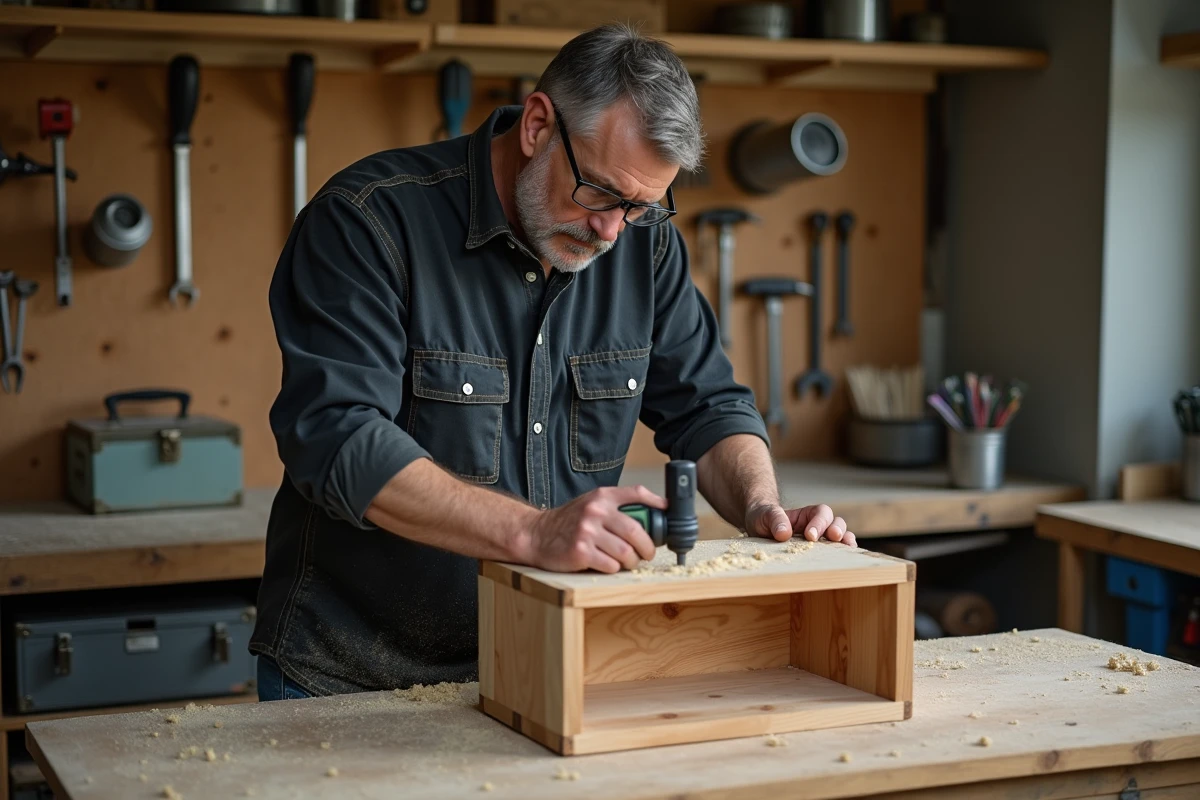
Complete kits sold by specialized retailers address this problem directly. They contain the materials, a printed or video step-by-step guide, and a project designed to be completed in one to two hours. No shopping list to prepare, no tutorial to search for across three different sites.
What a good kit concretely provides
- A defined project with a predictable outcome, which reduces the anxiety of the blank page (or white fabric)
- An introduction to technique without heavy investment, useful for testing punch needle before buying a professional frame
- A first finished object that serves as a basis for improvising your own variations later
The kit is not an end in itself. It serves as a launching pad. Once the technique is understood, most practitioners move away from it to adapt patterns, change colors, or repurpose the medium. This is precisely where personal creativity takes over.
Real-time inspiration: what live brings to the creative process
Blogs and Pinterest boards remain useful sources of ideas. Their limitation lies in the format: you see the finished result, rarely the process. However, watching someone create live teaches more than admiring a finished product.
Platforms like Twitch offer categories dedicated to makers and visual arts. Creators showcase their quick sketches, clothing customization attempts, or DIY projects live. The viewer sees the hesitations, the corrected mistakes, and the choices made in real time.
This format has a concrete effect on motivation. When you see an experienced creator redo a line three times before finding the right gesture, the pressure of perfection diminishes. The creative process becomes what it truly is: a series of attempts, not a flash of genius.
Exploring beyond your usual domain
Watching a live session on bookbinding while practicing drawing may seem off-topic. In practice, crossing techniques from neighboring disciplines generates new ideas. A folding technique observed in origami inspires a sewing pattern. A color palette seen in a ceramic project translates to a watercolor.
This cross-pollination between disciplines works better live than in photos, because the creator’s commentary explains their choices. You understand the reasoning behind the action, not just the result.

Building a creative habit without a rigid routine
Many creativity tips recommend establishing a fixed daily ritual. The intention is good, but the format poses a problem for most people whose schedules vary from day to day.
A more realistic approach is to anchor creativity to a contextual trigger rather than a specific time. For example: doodling in a notebook while the coffee brews, or cutting shapes from paper while waiting for a washing machine cycle to finish. The creative gesture attaches itself to an already existing moment of waiting.
- Keep a notebook and pencil within reach in the kitchen or living room, not tucked away in a drawer
- Leave an ongoing project visible on a table rather than in a bag, to lower the threshold for picking it up again
- Alternate mediums (drawing, collage, writing) from week to week to avoid fatigue with a single practice
The goal is not to produce a finished piece every day. It’s to maintain regular contact with the creative gesture. Ten minutes of imperfect sketches are worth more than an hour planned that never happens.
Everyday creativity requires neither exceptional talent nor expensive materials. An object to transform, a technique to test, a short format that fits into a break: these three elements are enough to kickstart a movement. The hardest part is not finding inspiration; it’s picking up the first tool and starting.